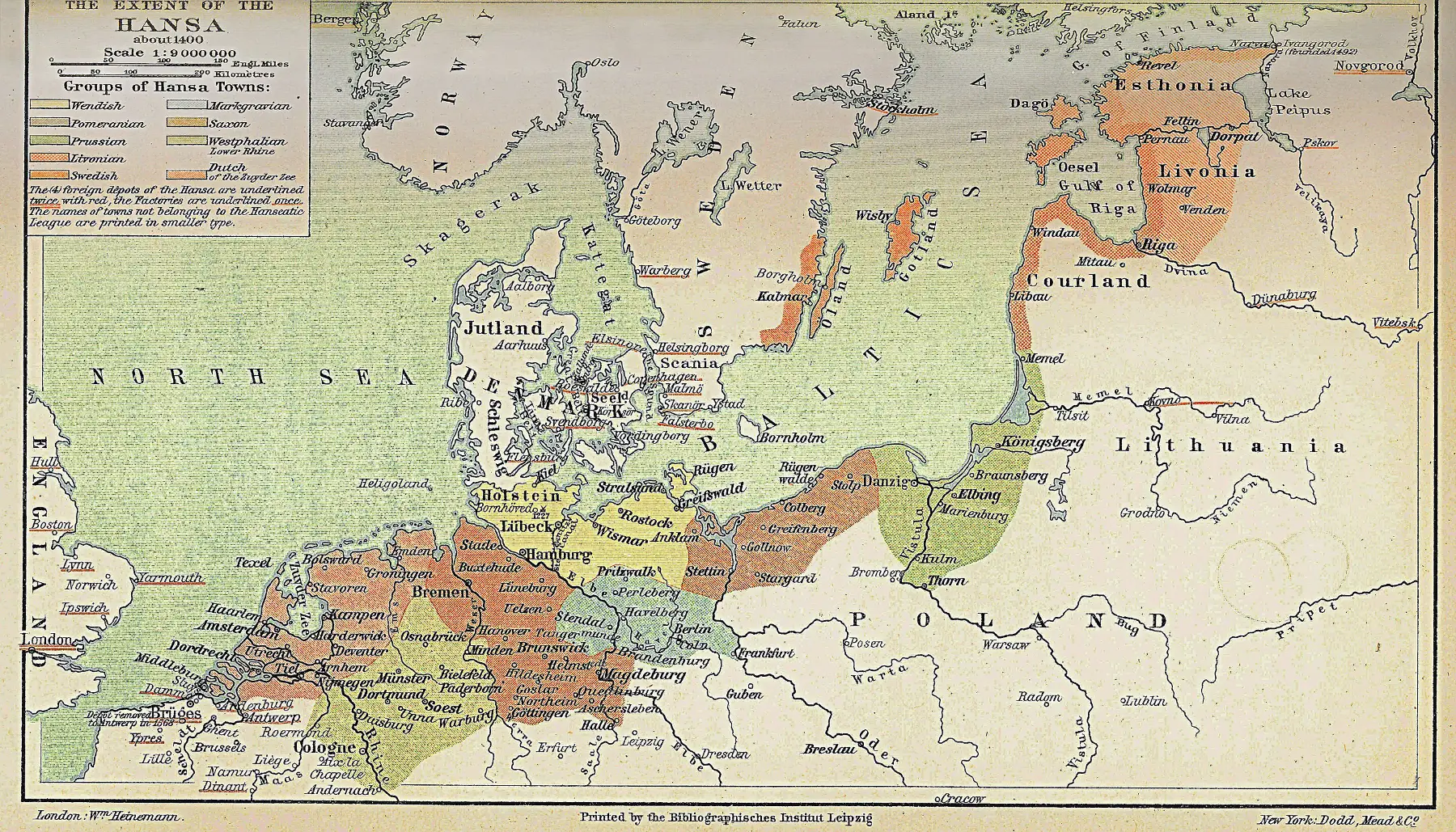
The reign of Margaret I, queen of Denmark, is marked by efforts to bring together the three Scandinavian countries of Denmark, Norway and Sweden under a single crown. Surrounded by enemies, the queen's reasoning was that such a union would provide a stronger position than the individual states to stand against the Hanseatic League, Germany and other foreign threats to the region, as well as the Baltics.
"Margaret's achievement at a time when all Scandinavia was being threatened by German cultural and economic domination was to unite the kingdoms and not only hold back the Germans but also regain lands lost to the south. At the time of her death, the Scandinavian Union was by far the most powerful force in the Baltic; it was also the second largest accumulation of European territory under a single sovereign."[[1]]
The beginning
Margaret sought to achieve this goal through the Treaty of Kalmar, introduced with the support of the Swedish nobility. She had already claimed the crowns of the three countries through her heir, Erik of Pomerania, in 1389.
The plan, however, was interrupted by Albert of Mecklenburg, Margaret's nephew and the erstwhile king of Sweden. For obvious reasons, he was affronted and wanted his position back; he was arrested 1389. Not one to give up easily, Albert contracted the Victual Brothers to counter-attack, and managed to take Bornholm and Visby in 1392.
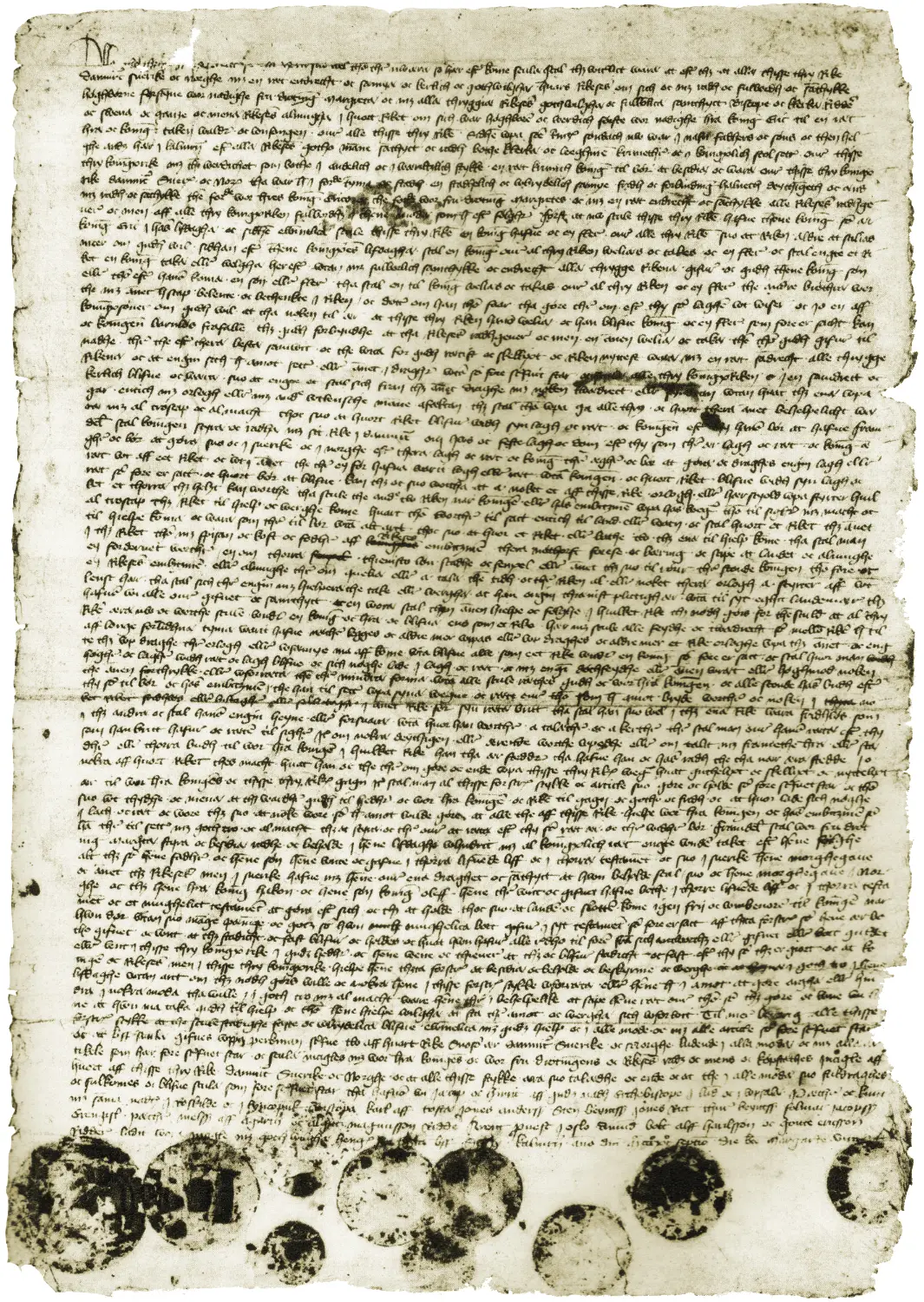
Following this development, the Hanseatic League mediated rule in Stockholm from 1395 to 1398. Albert had been released under the condition that he would pay a certain amount of money within three years, with Stockholm held as collateral. When he failed to meet the conditions, Stockholm passed to Margaret and her path was clear once more.
All three realms should exist together in harmony and love, and whatever befalleth one, war and rumours of war, or the onslaught of foreigners, that shall be for all three, and each kingdom shall help the others in all fealty
The middle
In the following years, Margaret succeeded in reclaiming several lost territories, effectively protecting the empire. The Kalmar Union was then formalised under King Erik, its first king, at his coronation on 17 June 1397 at Kalmar.[[2]] Representatives of the councils from all three states were present, but whether the treaty was agreed upon by all parties remains a subject of debate.
The treaty was characterised by a personal union, in which the three countries would retain their own borders and laws, but have a common monarch. An “everlasting union” was proposed, which meant:
“All three realms should exist together in harmony and love, and whatever befalleth one, war and rumours of war, or the onslaught of foreigners, that shall be for all three, and each kingdom shall help the others in all fealty...and hereafter the Nordic realms shall have one king, and not several."
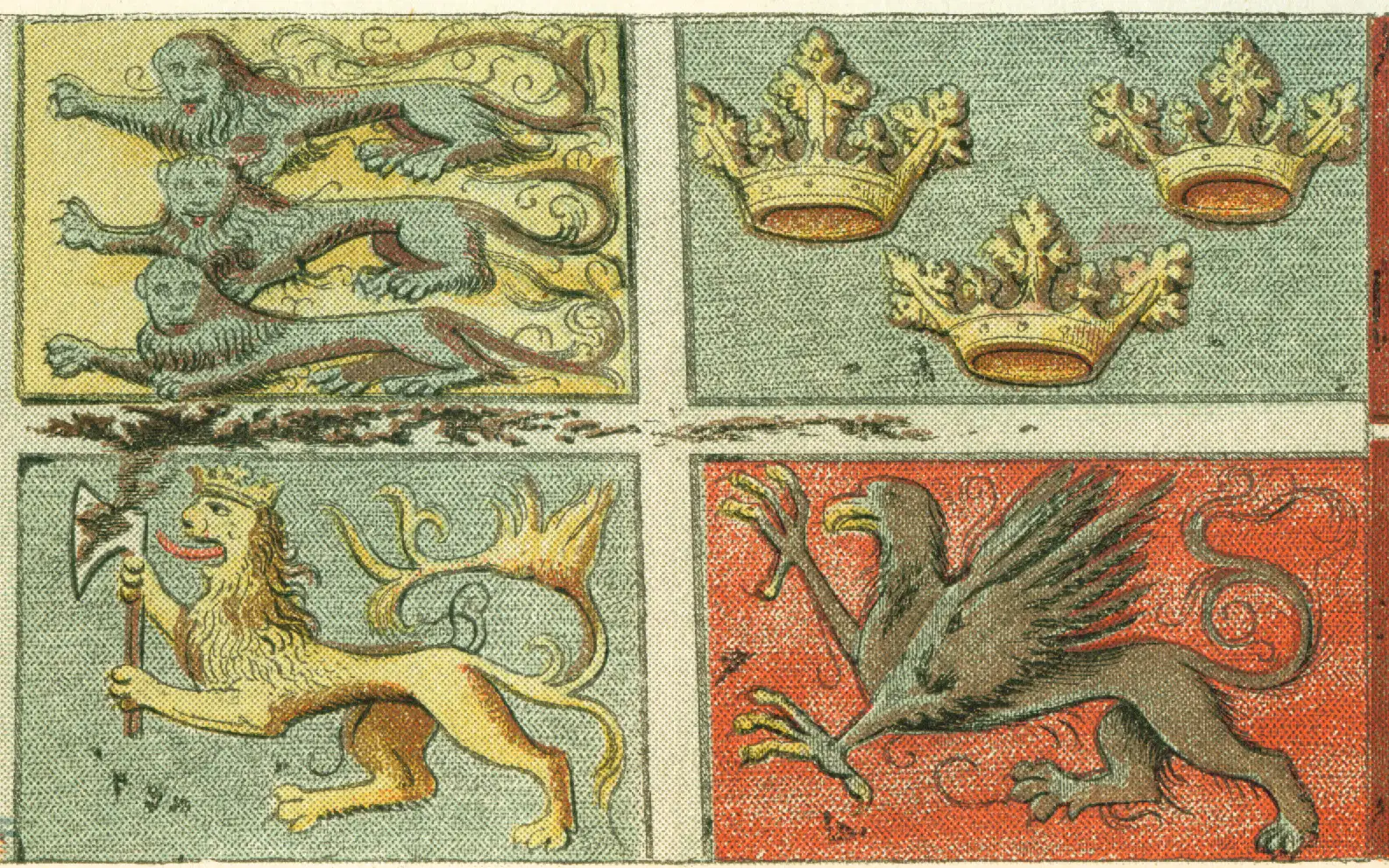
Erik's seal comprised the coats of arms of the three countries, as well as of Pomerania, in addition to the motif of three crowns – now better known as the national emblem of Sweden, but which existed before the Union and came to represent it during that time. The Kalmar flag or “banner of the realms”, which was believed to be a “red cross on a yellow field", also holds striking similarities to the present flags of these three countries.
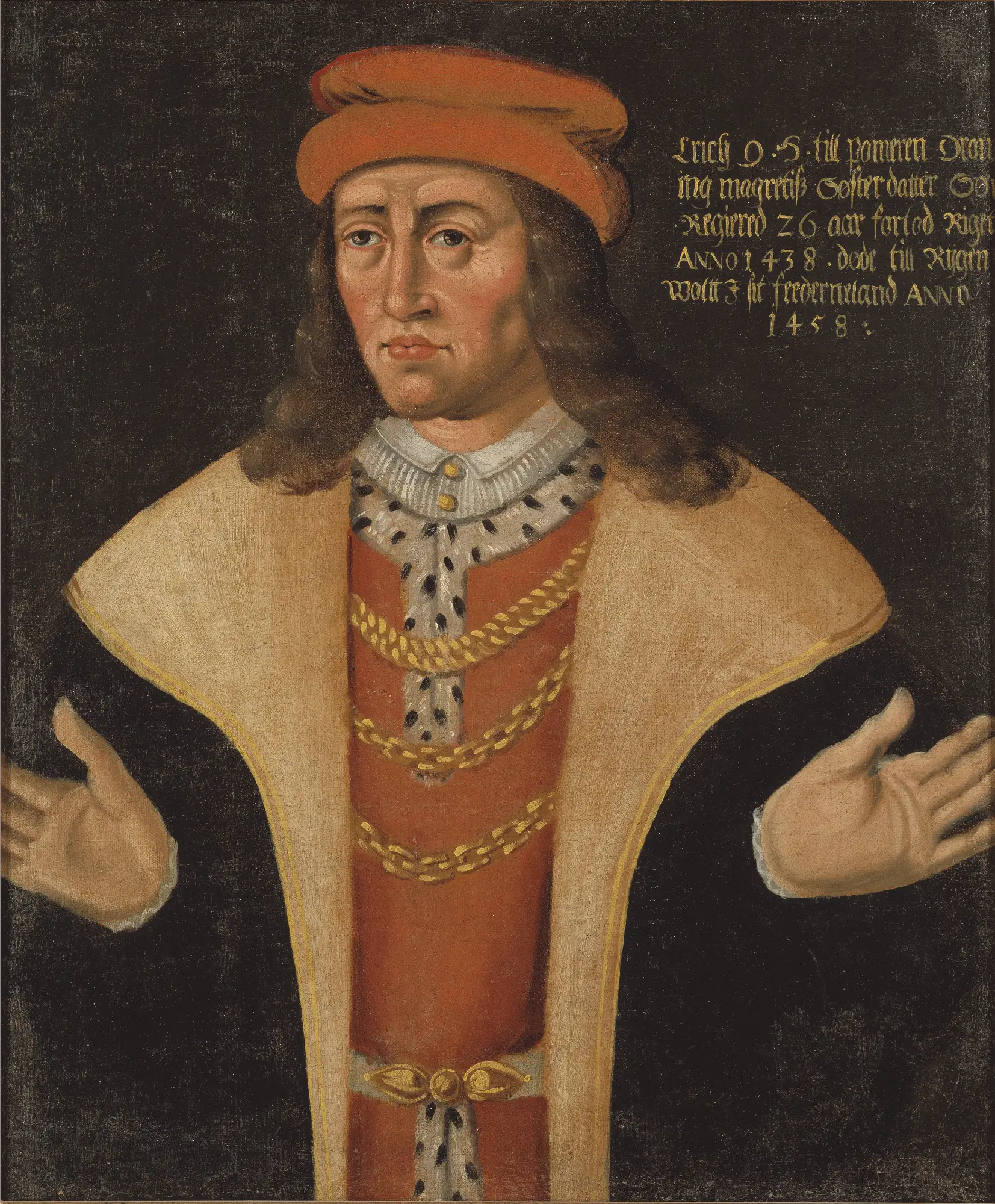
The nobility rebelled, successfully overthrowing the monarchy and raising one of its own, Gustav Vasa, to the position of king in 1523.
The end
The Kalmar Union, like any other, was not without problems. Though it endured for over a century, it faces its share of interruptions and discontentment. Among these was the growing dissatisfaction in Sweden due to higher taxes caused by an unsuccessful war[[3]], which led to the overthrow of King Erik following the Engelbrekt Rebellion.[[4]] Several rulers, and succession battles, followed.
Christian II of Denmark – immediately after he was crowned King of Sweden in 1520 following a successful invasion – ordered a massacre now known as the infamous Stockholm Bloodbath. More than 80 people were beheaded for their beliefs and loyalties, including many nobles. The nobility rebelled, successfully overthrowing the monarchy and raising one of its own, Gustav Vasa, to the position of king in 1523. One of King Gustav I's first moves was to withdraw Sweden from the Kalmar Union, and it then became an independent nation.
Following this development, Denmark and Norway formed a real union, which lasted much longer – until 1814, when Norway was transferred to Sweden. Norway finally gained independence in 1905.
Polmanarkivet is sustained by its Stewards
We have made this article free because we believe our family history belongs to everyone. If you value this work, please consider becoming a Steward of the Archive. Your annual contribution ensures these stories are never lost again.
Become a Steward[[1]]: The Middle Ages: Dictionary of World Biography, Volume 2, McFadden
[[2]]: There is some conjecture that the document representing the Union actually remained a draft as Margaret had objections; however it was followed broadly in terms of governance. (Encyclopaedia Britannica)
[[3]]: Against Holstein, during which Margaret was killed.
[[4]]: The rebellion began in 1434; Erik was overthrown from Denmark and Sweden in 1439, and Norway in 1442.