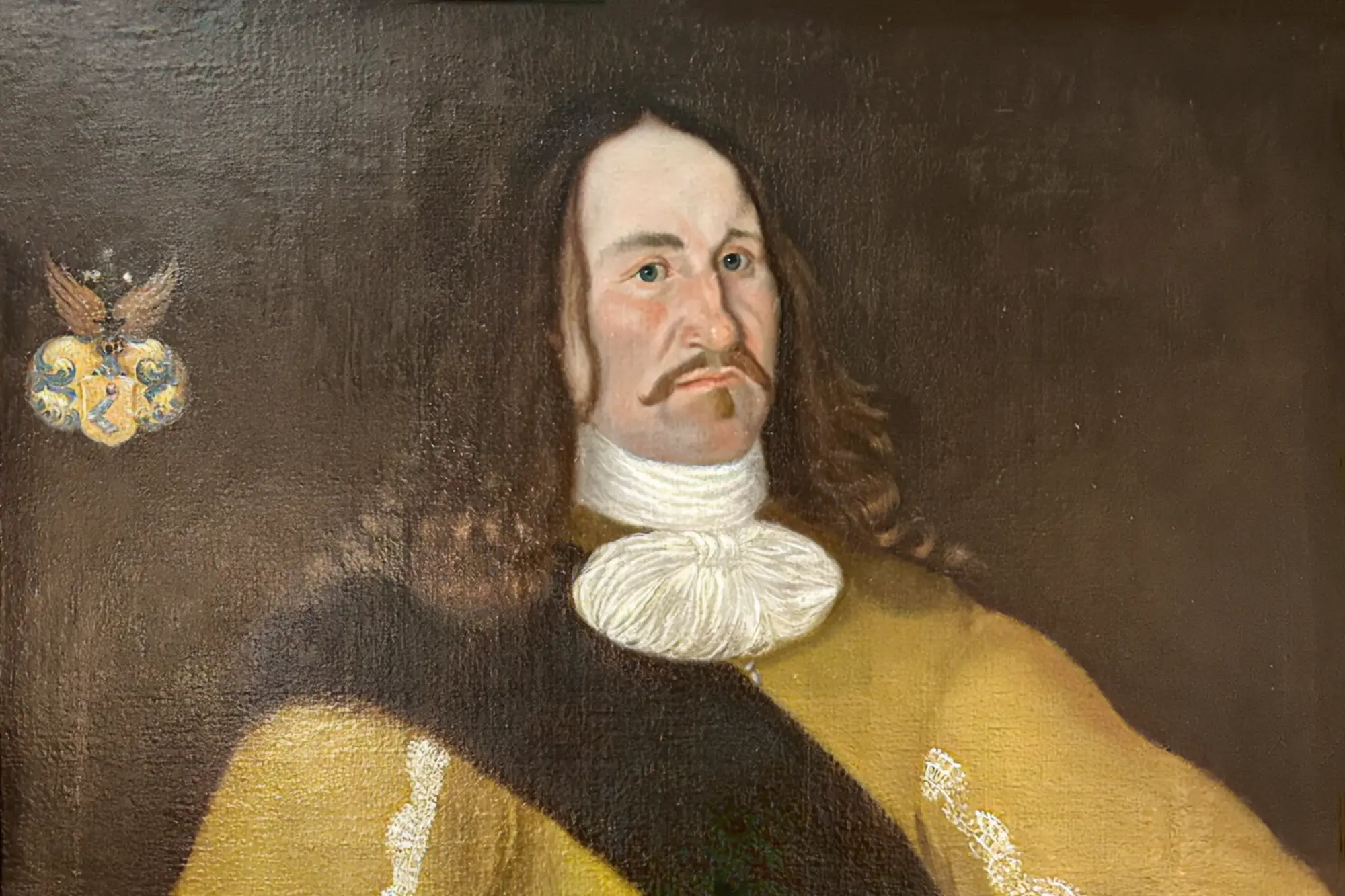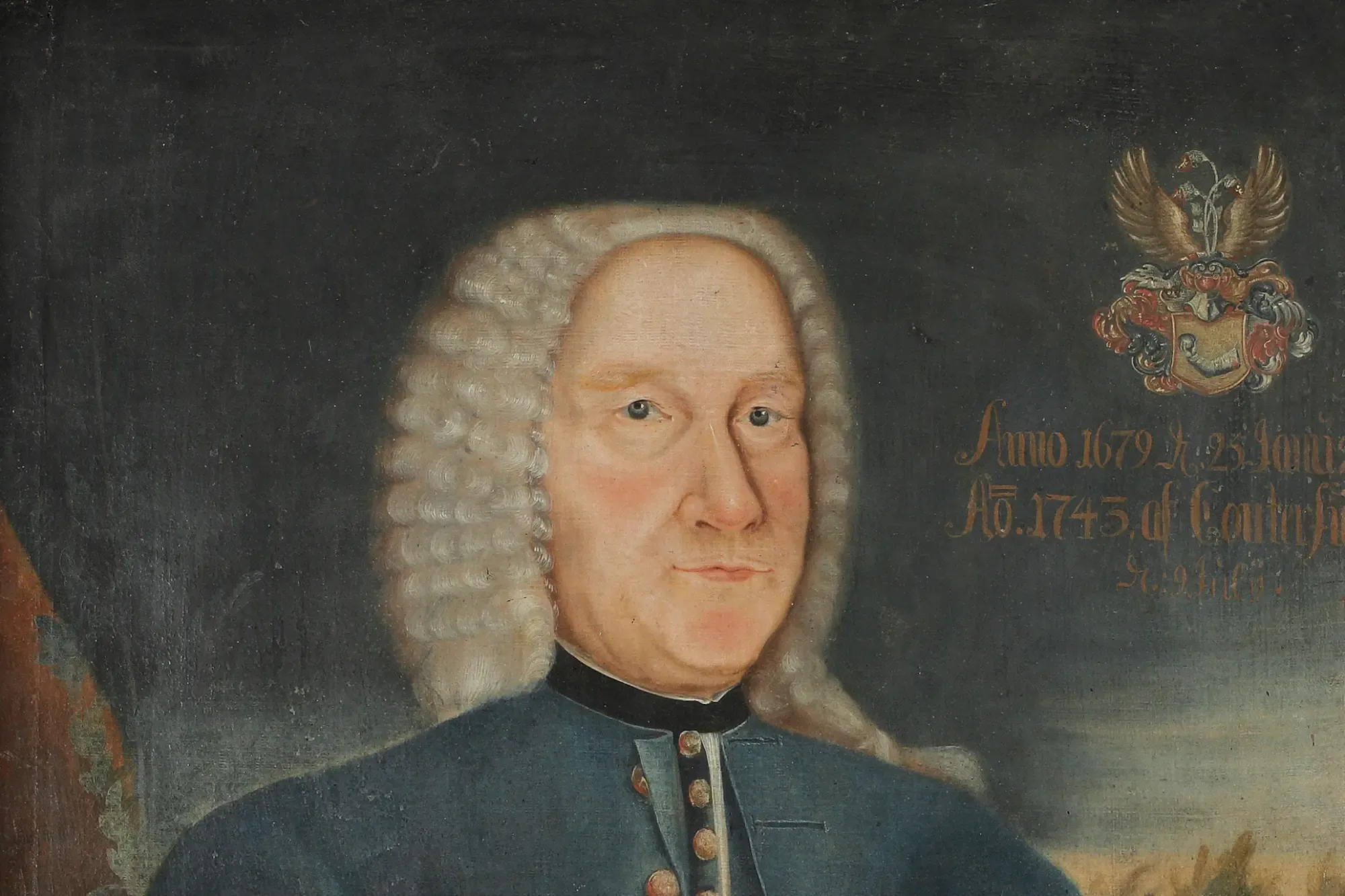
Lady of Ugglansryd
Christina Lilliesparre, known by the names Kierstin or Kirstin, was born in the late 16th or early 17th century to Olof Jöransson Lilliesparre af Fylleskog[[1]] and his second wife Christina Gunnarsdotter Galle (No. 162). She had at least one brother, two sisters named Brita and Beate, and two half-brothers.[[2]] Her father was a respected man who attended the Riksdag in Stockholm from 24-29 June 1573, during which changes in the church order that were adopted in the previous year were further discussed. He was also a participant in the Swedish Privy Council in Reval in 1589 – which successfully prevented the return of Poland’s sovereign Sigismund III Vasa to Sweden, causing a rift between King John III and the Council[[3]] – as well as the estate meeting held in Stockholm in 1590. Interestingly, Christina Lilliesparre’s maternal grandfather, in his time, chose to side with the reigning monarch and was beaten to death as a result.[[4]]
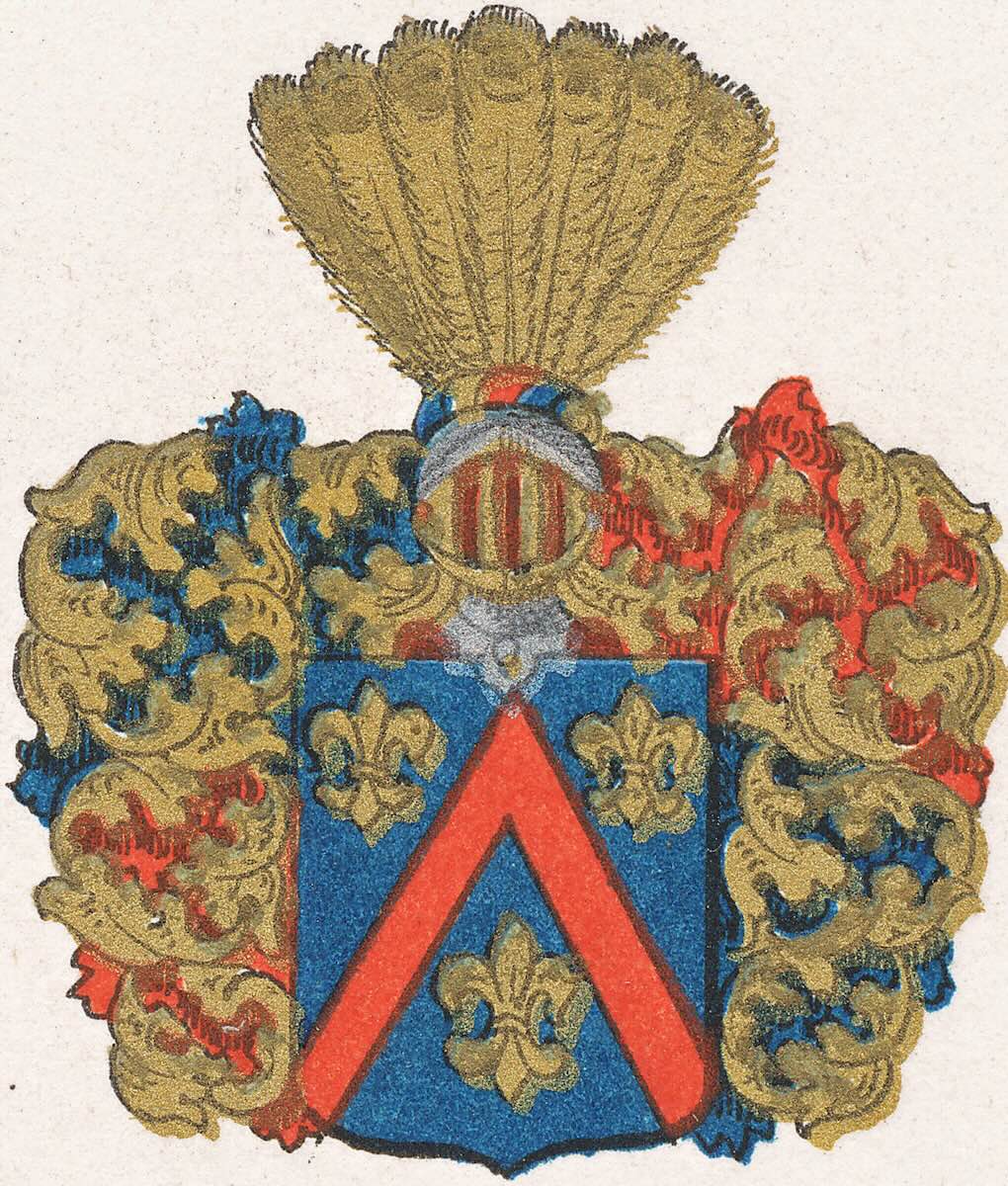
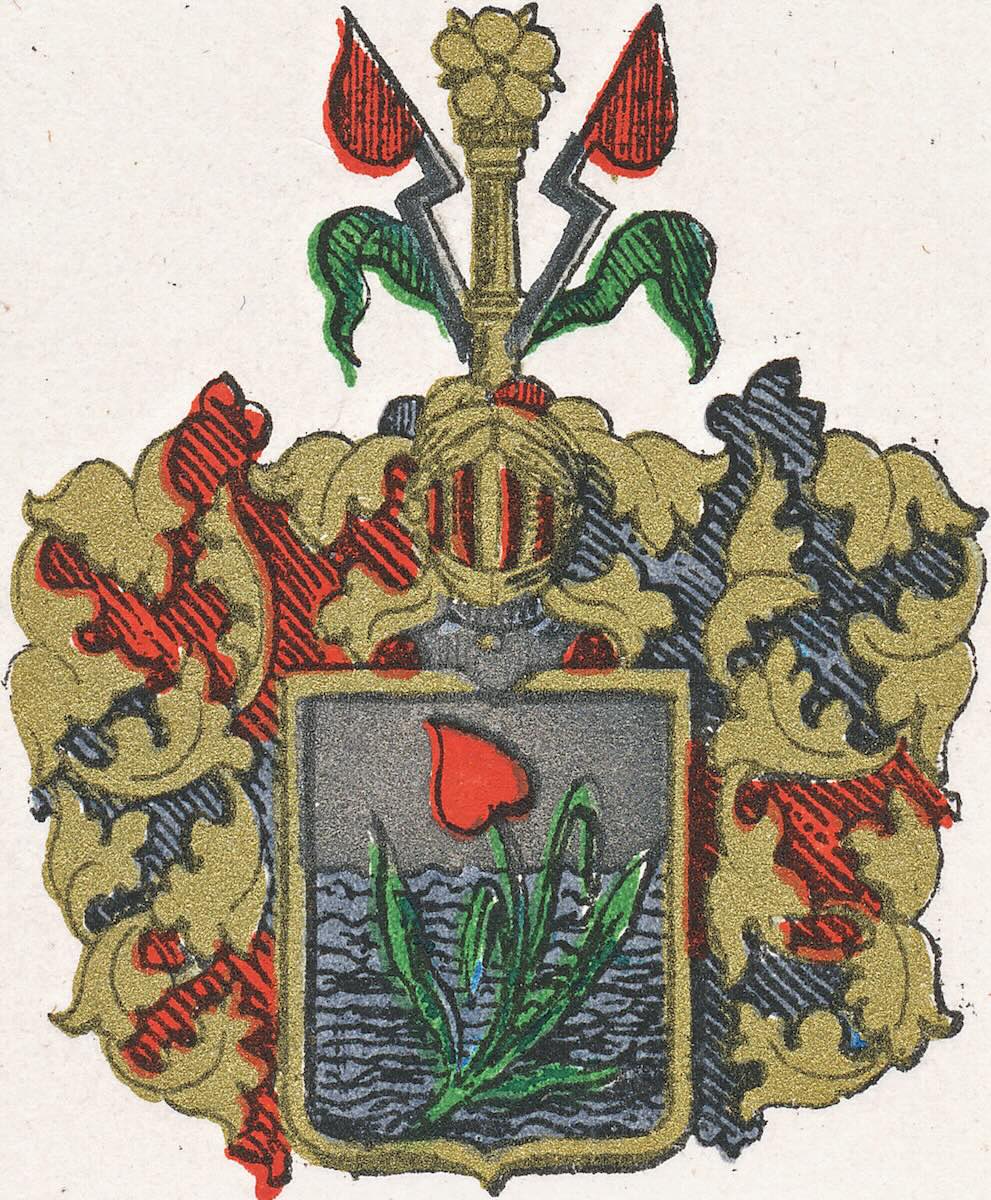
Lilliesparre (no. 44) coat of arms; Stiernstedt & Klingspor; photo via Riddarhuset / Galle (no. 162) coat of arms; Stiernstedt & Klingspor; photo via Riddarhuset
It is possible that Christina was born at the manor Ugglansryd in Ryssby, Sweden[[5]] – at any rate, it played an important role in her life. It belonged to her family – her mother owned it in 1595,[[6]] and in 1623, Christina’s brother Jöran Olofsson took over its ownership. At some point, most likely in the 1630s, the manor passed on to Jöran Polman, who married Christina circa 1623. Their alliance was perhaps formed when Polman was the captain of his regiment in Kronoberg, the home county of the Lilliesparre family.
Ugglansryd remained with the Polman family and its descendants until 1798, and it is likely that Christina called it home for most of her life. Three children were born to the couple – Johan (c. 1623-25), Gustaf and Anna Christina. In 1625, Christina’s brothers Jöran and Sven were knighted under No. 8 (later No. 44) along with her male cousins.[[7]] A year later, Jöran Polman was granted noble properties extending to his male descendants.[[8]]
Sweden at this time was ruled by King Gustavus II Adolphus, who is credited with the rising power of the country and its growing empire. Jöran Polman, being in the military, was likely often away from his wife and family; he was promoted to Chief Quartermaster in 1629, and then became a major. Between 1632 and 1644, the Swedish Empire was ruled by high nobles until Queen Kristina came of age and ascended the throne. Despite a tremulous start, she is remembered as a discerning and clever monarch who transformed the image and identity of Sweden. She also successfully advocated for the conclusion of the Thirty Years’ War in 1648.[[9]] Jöran Polman is believed to have died abroad shortly before this, perhaps in battle.
Prior to his death, however, Christina's husband caused her much agony. In 1635, it was brought to light that he had sold her morning gift, intended for her financial security, by coercing her to sign off the papers to a non-nobleman named Captain Lauri, possibly for a loss.[[10]] At the same time, rumours of Jöran's affair with her first cousin Beata were floating, coupled with a charge of infanticide.[[11]] Perhaps it was a relief for Christina that her husband used her money to flee the country in a sure admission of his guilt, but at least thereby preventing further distress and disgrace to the family with his presence. He would not return alive.
In 1637 and 1638, Christina Lilliesparre asserted legal rights to certain crofts and homesteads on Ugglansryd that were disputed to have been built on common land by Carl Hård.[[12]] In these filings, she is referenced as “Lady Kirstin of Ugglansryd”, indicating that perhaps ownership of the property had passed on to her by then, following her husband's permanent departure from Sweden; all his pending disputes were by then settled or cancelled.[[13]] In a court document from 1648 pertaining to her son Johan's manslaughter of his servant, Christina is referred to as “a sorrowful and much-distressed widow (en Sorgefull och mökit bedrõffwat änka)”. It is also indicated that she was the mistress of Ugglansryd and Johan usually stayed with her except when he was visiting his farms.[[14]] She was likely responsible for the repatriation of her husband's body and its subsequent burial in the sacristy of the church in Ryssby, as well as the scrubbing clean of Jöran's name and reputation.
Christina Lilliesparre would live to see her sons ennobled by the Queen in 1650. Johan and Gustaf, both in the military, were knighted at Stockholm Castle on 16 September, taking on the name Påhlman on 3 October under No. 501.[[15]] Christina passed away a year later. Her name posthumously came up in a few legal disputes in 1652 and 1653, involving financial loans as well as the purchase of farms wherein the sale remained incomplete or required due settlement. These matters were dealt with by her children. In a 1658 letter written by Johan regarding money she had previously borrowed, he referred to her as “blessed mother” – an indication that she tried to do right by her family despite her many challenges.[[16]]
[[1]]: A medieval salvation family whose oldest known member was named Jöran Olofsson.
[[2]]: “Lilliesparre af Fylleskog nr 44”, Adelsvapen-Wiki, https://www.adelsvapen.com/genealogi/Lilliesparre_af_Fylleskog_nr_44, accessed: 25 May 2023
[[3]]: Karin Tegenborg Falkdalen, “Anna, prinsessa”, Svenskt kvinnobiografiskt lexikon, https://www.skbl.se/en/article/Annaprinsessa, accessed: 26 May 2023
[[4]]: During the 1568 coup against King Erik XIV by his brothers, Gunnar Galle – who had been ennobled by the king – was beaten to death by Peder Arvidsson Kase for his loyalty. Gunnar’s wife was pregnant at the time.
[[5]]: A locality in Kronoberg county, Sweden
[[6]]: Josef Henrik Theophil Rosengren, Ny Smålands Beskrifning [New Småland Description], volumes 2-3, (Vexiö: Vexiö-bladets boktryckeri, 1914), 9, https://books.google.com.au/books?id=bKz3h4fVLksC
[[7]]: “Lilliesparre af Fylleskog”, Roskildes Historie, https://www.roskildehistorie.dk/stamtavler/adel/svenske/Lillie/Lilliesparre.htm, accessed: 17 May 2023
[[8]]: “Sunnerbo dombok 1635”, Sunnerbo.nu, https://www.sunnerbo.nu/Sunnerbo-dombok-1635.s2?highlight=Polman, accessed: 28 March 2023
[[9]]: A highly destructive religious war in Europe between 1618-1648 that led to millions of deaths. It started within Germany’s Holy Roman Empire, but involved more countries including Sweden in the 1630s.
[[10]]: Elias Palmskiöld, Genealogiae Sveo-gothicae, Tomus XLI, Litt. P, Pars 3, MS Palmsk. 232, p. 425, Palmskiöldska samlingen, Uppsala University Library, Uppsala
[[11]]: Västbo Häradsrätt. Court Protocol regarding Beata Lilliesparre, October 2–3, 1635. Göta Hovrätt - Advokatfiskalen Jönköpings län (E, F, G, H, N) EVIIAAAC:8 (1633-1649), Image 560 / Page 33. AID: v190284.b560.s33, NAD: SE/VALA/03825/03. ArkivDigital
[[12]]: Göta Hovrätt - Advokatfiskalen Kronobergs län (G) EVIIAAAD:12 (1635-1640) Bild 190/sid 44 (AID: v49320.b190.s44, NAD: SE/VALA/0382503)
[[13]]: Göta Hovrätt - Advokatfiskalen Kronobergs län (G) EVIIAAAD:12 (1635-1640) Bild 155/sid 9 (AID: v49320.b155.s9, NAD: SE/VALA/0382503)
[[14]]: Göta Hovrätt - Advokatfiskalen Kronobergs län (G) EVIIAAAD:15 (1648-1649) Bild 65/sid 21 (AID: v49323.b65.s21, NAD: SE/VALA/0382503); Göta Hovrätt - Advokatfiskalen Kronobergs län (G) EVIIAAAD:12 (1635-1640) Bild 255/sid 21 (AID: v49320.b255.s21, NAD: SE/VALA/0382503) and Bild 256/sid 22 (AID: v49320.b256.s22, NAD: SE/VALA/0382503)
[[15]]: “Påhlman nr 501”, Adelsvapen-Wiki, https://www.adelsvapen.com/genealogi/Påhlman_nr_501, accessed: 17 March 2022
[[16]]: Göta Hovrätt - Advokatfiskalen Kronobergs län (G) EVIIAAAD:17 (1652-1653) Bild 113/sid 58 (AID: v49325.b113.s58, NAD: SE/VALA/0382503; Göta Hovrätt - Advokatfiskalen Kronobergs län (G) EVIIAAAD:17 (1652-1653) Bild 58/sid 3 (AID: v49325.b58.s3, NAD: SE/VALA/0382503); Göta Hovrätt - Advokatfiskalen Kronobergs län (G) EVIIAAAD:17 (1652-1653) Bild 111/sid 56 (AID: v49325.b111.s56, NAD: SE/VALA/0382503); Göta Hovrätt - Advokatfiskalen Kronobergs län (G) EVIIAAAD:17 (1652-1653) Bild 259/sid 35 (AID: v49325.b259.s35, NAD: SE/VALA/0382503)