Jöran Polman d.y.
PersonaktThe Dashing Major
Like his father, Jöran Polman the Younger was sometimes known by the names Jürgen and Göran, and he also joined the military. One of four sons of Jürgen Polman (The Elder), he was born into the old Baltic-German family in 1597.
In 1618, Jöran was dragged to court for instigating a drunken brawl at Johan Schönbeck's cellar. Upon consuming a generous amount of alcohol that he hadn't paid for, the cellar boy refused to serve him. Jöran became increasingly angrier upon such treatment, verbally abusing him, and eventually punching him and tearing half his beard off. He was sentenced to 40 marks for his behaviour.[[1]]
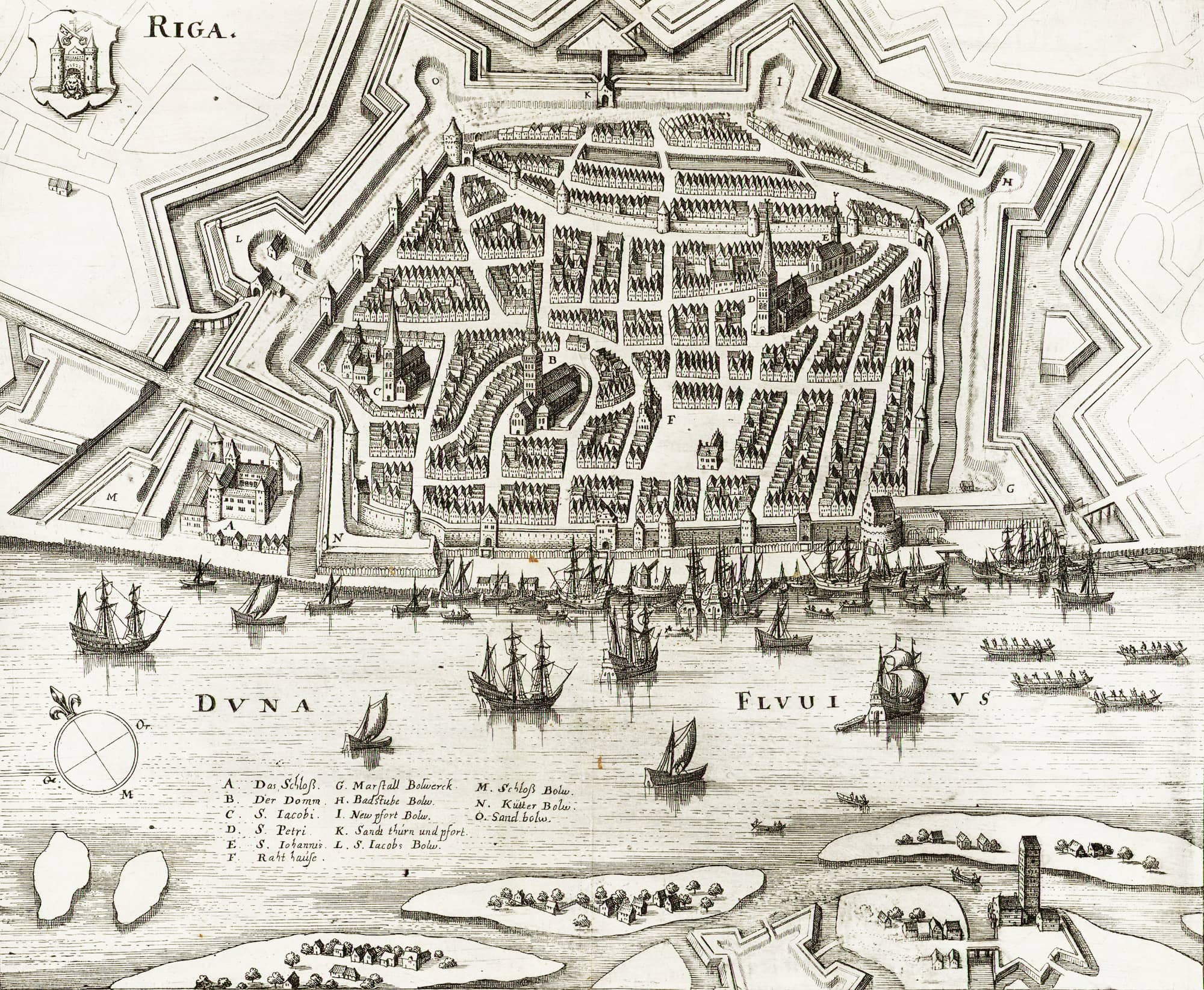
Jöran started out as a noble bursch in the bodyguard in 1619, then became a hovjunkare –duties for this rank typically involved overseeing the king’s guest room, serving food to royals, and commanding the horsemen[[2]] – and worked his way up to become captain of the Kronoberg regiment in 1623.[[3]] He was also chamberlain to King Gustavus Adolphus, and served in the Thirty Years’ War as captain of the Smålanders under Herman Wrangel.[[4]] In 1621, Jöran was among the officers under Wrangel who captured the fortress of Riga during the Thirty Years’ War, ensuring Swedish control over the coasts of the Baltic.[[5]]
Around 1623, Jöran married Christina Lilliesparre of Sweden – daughter of Olof Jöransson Lilliesparre (af Fylleskog, no. 44) and Christina Gunnarsdotter Galle (in Sweden, no. 162) – with whom he fathered three children named Johan, Gustaf and Anna Christina. Notably, through his marriage, he was fortunate enough to become the owner of the Swedish manor Ugglansryd, located in Ryssby in Kronoberg, Småland, which was owned by the Lilliesparre family.
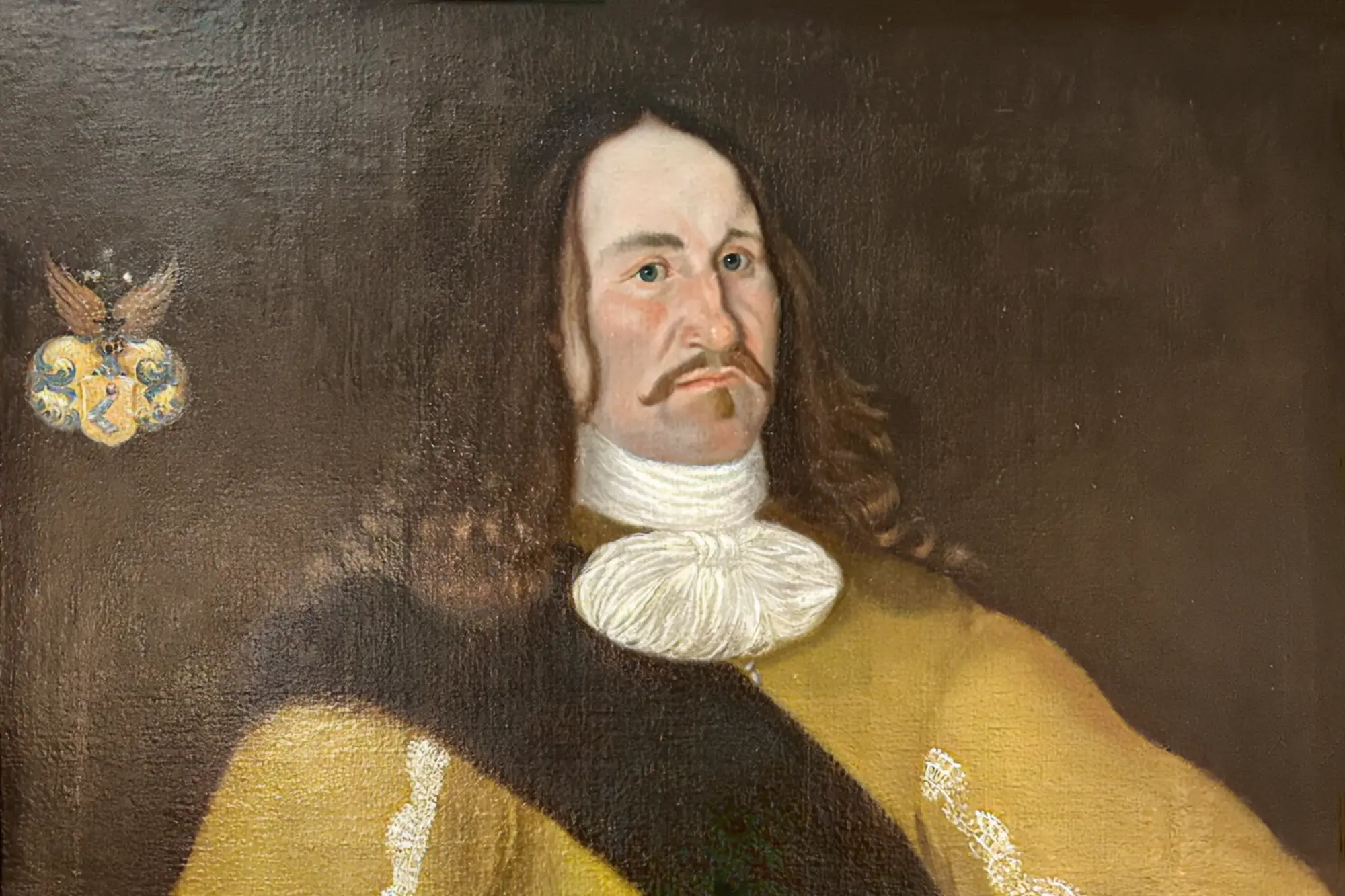
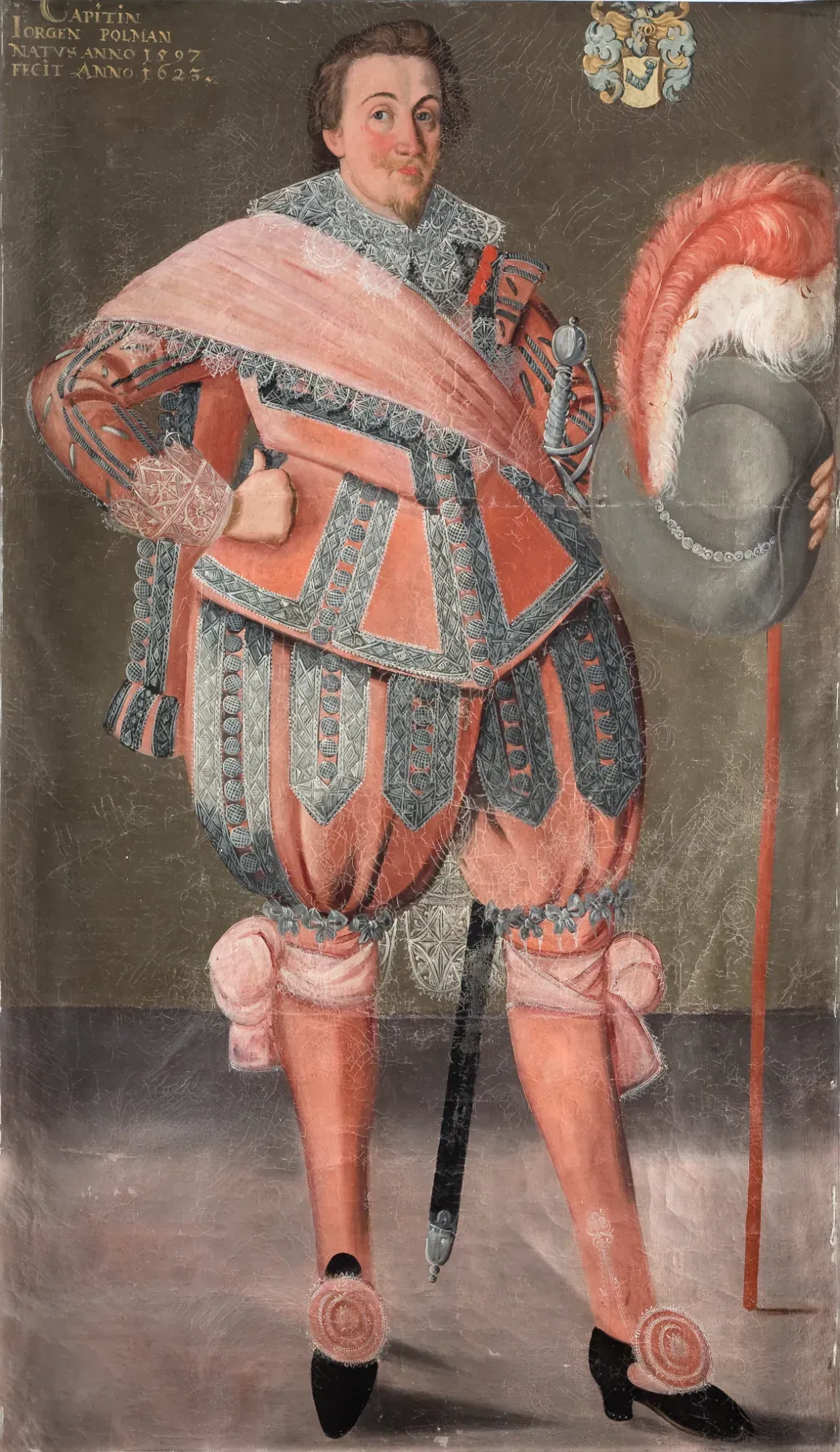
At least one portrait of Jöran exists – an oil on canvas from 1623. It depicts a confident man, resplendently attired in a doublet and knee-length bloomers according to the fashion of the time, holding a sword and a hat likely adorned with ostrich feathers, marking his promotion as the captain of Kronoberg.
“It is noteworthy that the costume of Captain Jorgen Polman is complemented by a Cossack with an eight-piece peplum. (His dangling right sleeve is shown in the background.) Therefore, on the peplum, we do not see the aiguiette bows with which it was fashionable to decorate the costume. At the same time, the artist depicted aiguiette bows that tie Jorgen Polman’s pants with red silk stockings.[[6]]
The portrait was painted by Georg Günther Kräill von Bemeberg (1584-1641), who was a renowned soldier with a gift for sketching battle plans and tactics as well as conjuring remarkable portraits. During a particularly uneventful posting at Kalmar, Kräill began sketching portraits of his fellow officers – five of whom, including Jöran, posed willingly.[[7]] These portraits are on display in a collection at Skokloster Castle, which is located on a peninsula of Lake Mälaren between Stockholm and Uppsala.
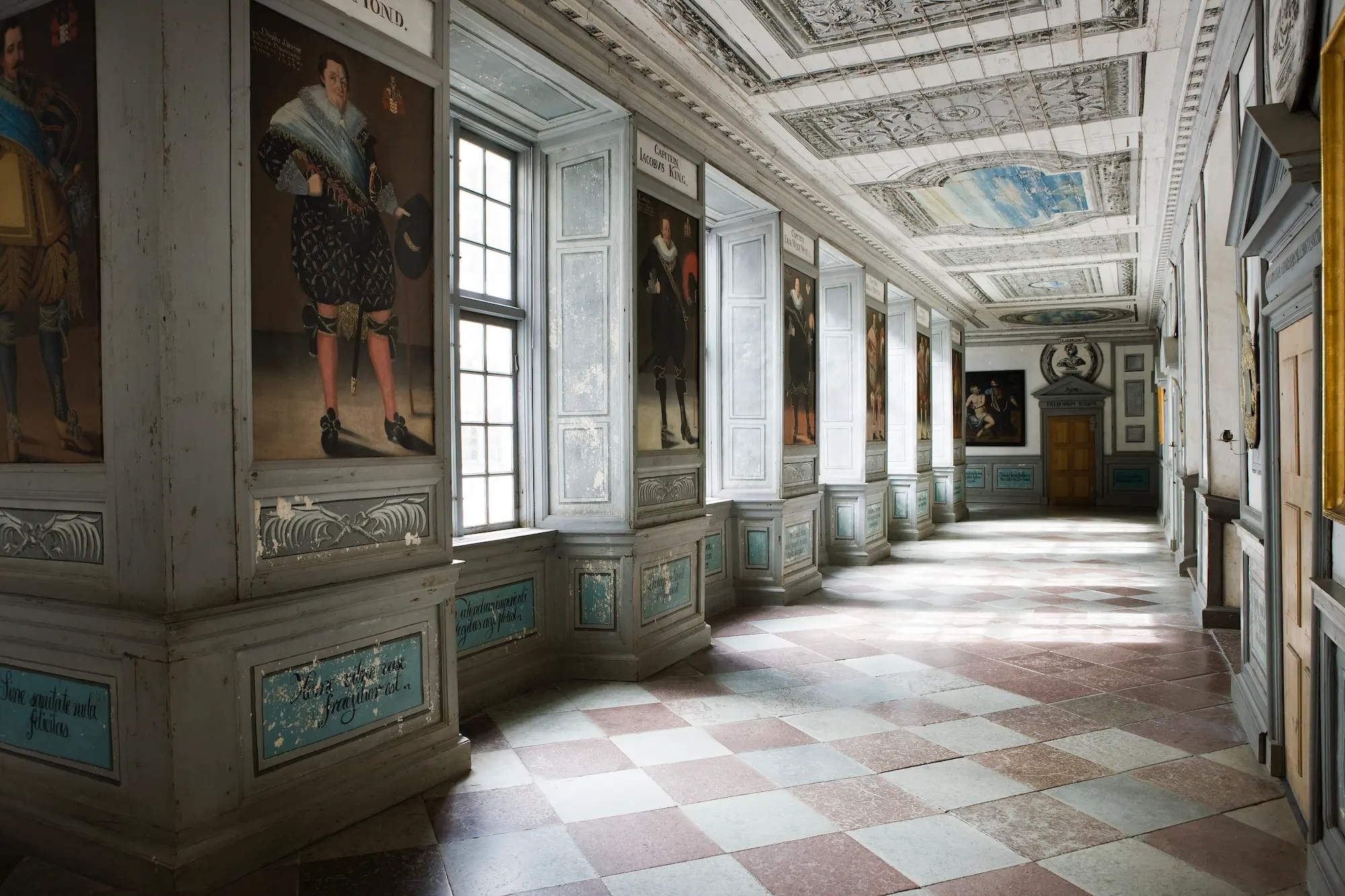
The posting at Kalmar, though ultimately ordinary, did require some strategy and preparation.
“In the spring of 1623, there was concern about a Polish landing in the neighbourhood of Kalmar. The army was put on a war footing, and Wrangel was ordered to be responsible for the border defence around Kalmar. [...] He was to call up the entire Smäland Regiment, both old and newly enlisted men, as well as the two companies of the Ostgöta Regiment, which came from Jönköping County. The troops were to be assembled as soon as possible in Kalmar. The soldiers were to be equipped with swords, flintlocks and a fortnight's provisions. [...] Herman Wrangel brought his own regiment from Kronoberg County. The immediate command of this regiment was held by his lieutenant colonel, Thomas Muschamp.”[[8]]
As captain, Jöran also had responsibilities to recruit troops. This he did fairly successfully, in comparison to other companies and given the low motivation to fight at the time:
“Major Johan Nieroth and Jöran Påhlman recruited their companies from Sunnerbo. Together they could account for 251 present and 149 absent at the enlistment. Two were ill at home and 72 were ordered to serve at the fortress in Riga, 43 men had escaped and 32 were reported as disobedient.”[[9]]
In 1623, it came to light in court that “the honorable” Oluf Strååle had had his only son, Swen Pärszon, forcibly conscripted and placed under Jöran's command. It emerged that the reason behind this was the precarity of them being tenants on mortgaged property, though it is unclear if Jöran was involved in any further capacity.[[10]]
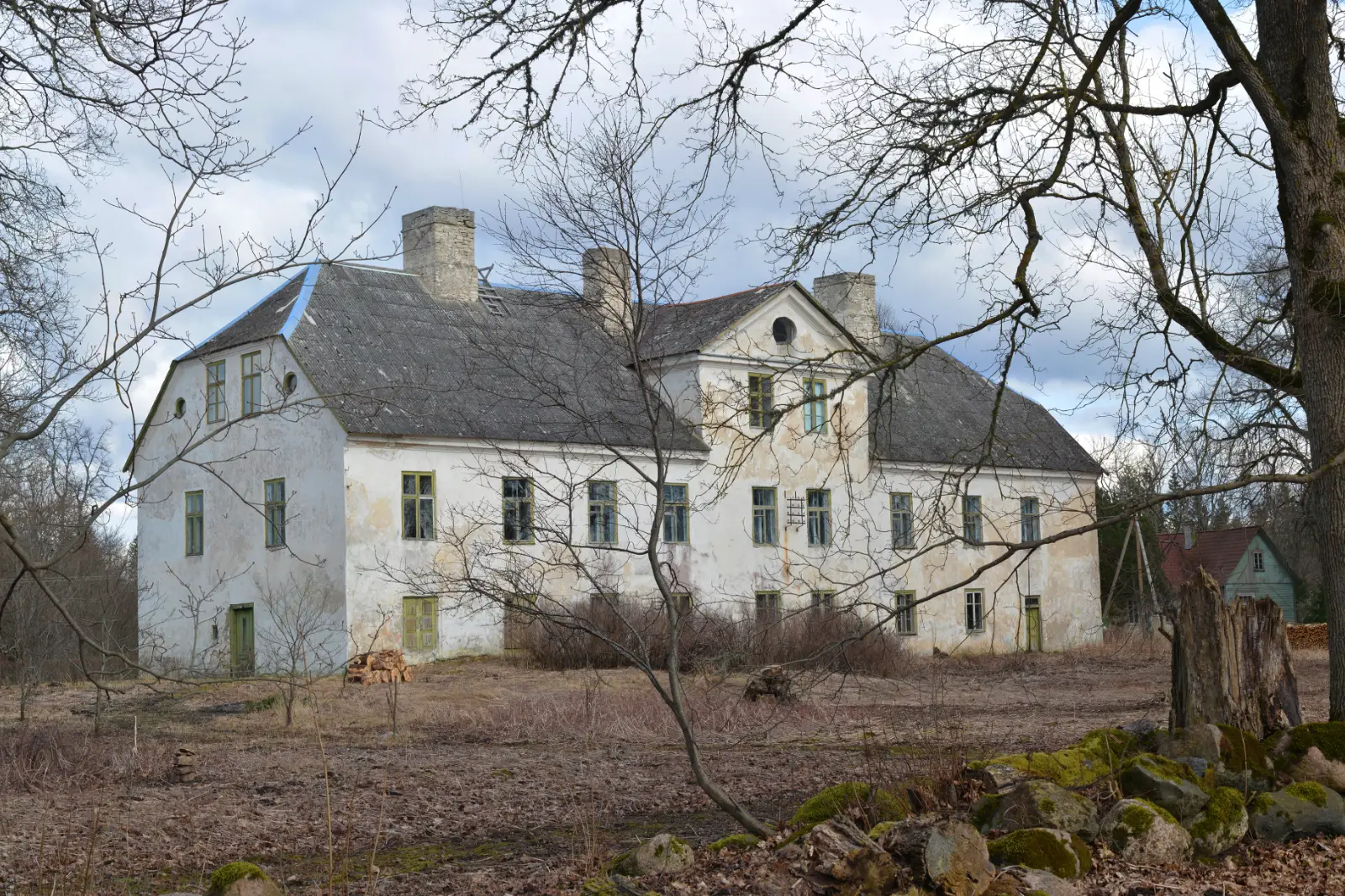
[…] Ugglansryd remained in the family for at least 175 years, until 1798, a place where future generations lived and thrived.
In October 1624,[[11]] Jöran received some farms and the manor Prästeboda in the hamlet of Sunnerbo district from King Gustavus Adolphus, and incorporated it as a barn estate under his own manor Kvänjarp Södregård. The family would eventually lose this to the Crown in 1683, presumably as a result of the Great Reduction of 1680, during which manors and lands that were earlier granted to the nobility were taken back. Jöran also made an unsuccessful request for Tuttomäggi (Tuudi), Estonia – the manor coveted by his father – in 1628. However, Ugglansryd remained in the family for at least 175 years, until 1798, a place where future generations lived and thrived.
As part of his rank and status, Jöran often attended the local court, and is mentioned as being present for several cases between 1623 and 1626 as “the honourable captain” appointed by the King.[[12]] His name also appears in several court records pertaining to his subordinates, identifying him as their leader; some of them include Bengt Nillszonn (stole a kettle, 1625), Knut Larszon (caused church disturbance, 1625), Mårten Krumb (a “valiant lieutenant” who represented Christina Lilliesparre in a property dispute, 1625), and Jon Jönszon (former corporal, petitioned for assistance due to handicap, 1636).[[13]]
In 1625, Jöran recovered money and items stolen from a Danish priest by a thief named Boo Mårtenszonn. These included 46 daler in cash, a gilded credence (a type of small shelf or table), two stoups (tankards/cups), two skins, and a gun. Jöran was seemingly involved in apprehending the thief, for which he received 10 riksdaler "when he caught him at Hermann Capell's farm.” This information was repeated at a later accounting of the stolen goods in January 1627.[[14]]
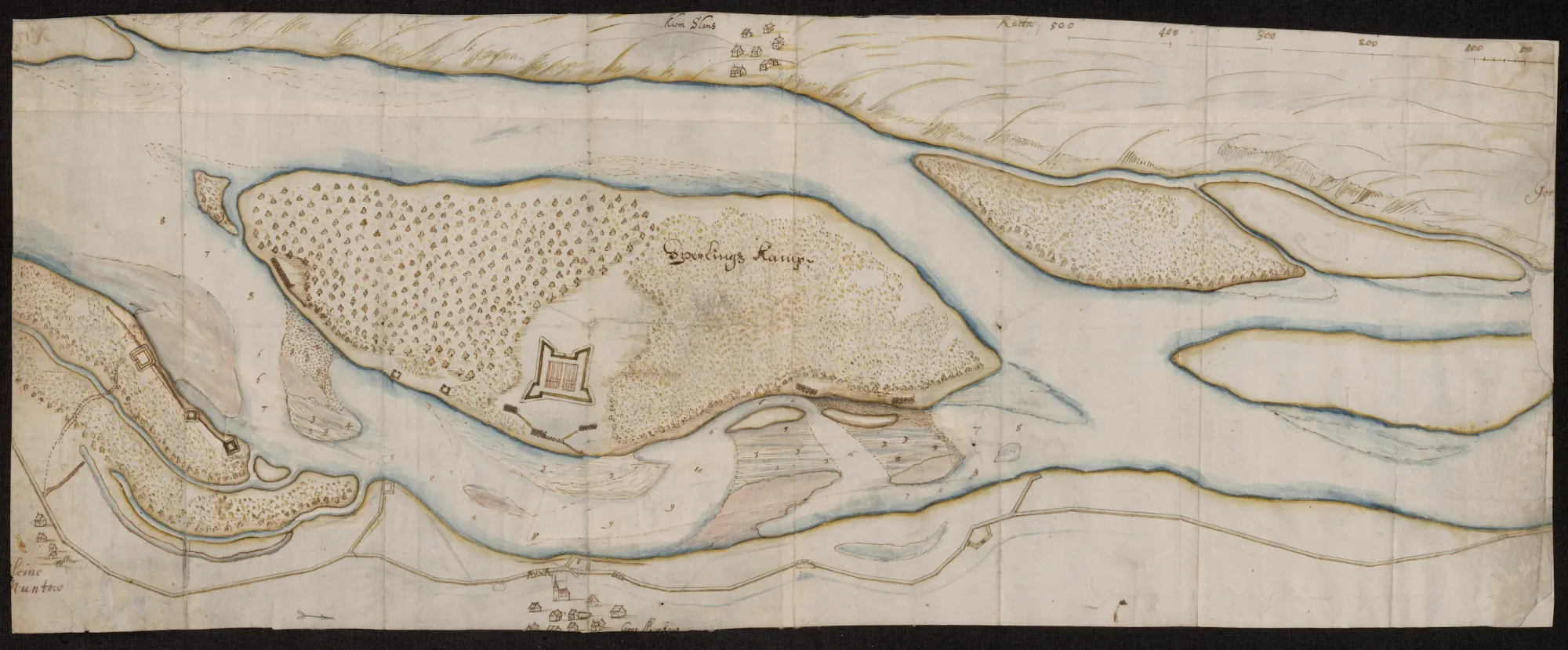
Jöran remained in the Kronoberg regiment under Thomas Muschamp, as captain between 1626-27, and was promoted to the rank of chief quartermaster in 1628-29.[[15]] He allegedly then became a major. In 1626, King Gustavus Adolphus transferred the war with Poland to Polish Prussia, and the Kronoberg regiment left for Prussia by way of Stockholm on the eve of the war. The regiment operated across the difficult terrain of the Vistula delta, including strategic points like the island of Sperlingsholmen (Fig. 5), as they advanced toward the town of Mewe. In September, when the Poles retaliated to attack the town of Mewe near Gdansk, the King and Kronoberg regiment arrived to defend it. The regiment lost 35 men. Following reinforcements from Livonia, the King and Kronoberg regiment were among 3,000 soldiers battling Polish forces on 21 September.
“Together with another detachment, Muschamp's men were ordered to advance up the slope. With great difficulty they made their way up the hill and were immediately attacked by Polish infantry and cavalry. But Muschamp's musketeers ‘manfully defended themselves and the room they had occupied’, and after two hours of battle, the colonel was able to make a strong flank attack and drive the Poles from their entrenchments. They lifted the siege of Mewe and withdrew. On 22 September the Swedish king entered the town.”[[16]]
Jöran subsequently departed the kingdom for mysterious reasons... he had permanently departed with no intention of return.
In 1627, a majority of the regiment fell ill and returned to Sweden in November. Around this time, Jöran responded to warnings regarding his “arrendator", or tenant, Måns Jonszonn, confirming a Proclamation of Peace over themselves and their families – perhaps in response to some tensions between the two.[[17]] In 1629, the Kronoberg regiment was at Marienwerder after it was regained from Polish forces, which was challenging. Later that year, Muschamp died and was replaced by David Drummond.[[18]]
Later activities of the Kronoberg regiment were listed thus:
“During the following years of fighting, the Kronoberg regiment also fought in Poland, but when the King moved the seat of war to Germany in the Thirty Years' War, the Kronobergers had to stay at home. Here they had to be on standby and protect the southern border against the unreliable Denmark. It was not until 1635 that the regiment again travelled across Ostersiön to Prussia. The force, under the command of its new colonel, Hans Drake, numbered about a thousand men, while nearly 400 men had to remain at home. In the autumn, the regiment joined the main Swedish army in northern Germany. In the summer of 1636, it took part in Johan Banér's campaign against the imperial troops.”[[19]]
However, it is unclear how much of this Jöran participated in. In 1626, he had received noble properties and privileges from the King for “his children and grandchildren through the male line for eternal ownership”. On 10 January 1635, in court, it came to light that he had sold these properties to Captain Johan Laurj for 413 riksdaler along with the original letter. Jöran subsequently departed the kingdom for mysterious reasons, and would most likely use the money to sustain himself abroad.[[20]] Court records from 1637 involve his tenant Måns Jonszonn once again, detailing some previous financial disputes that were now settled, voided, “as well as all writings new and old which passed between well-born Jöran Polman and Måns Jonszon, are dead, and in all letters cancelled.”[[21]]
The above cases strongly indicate that Jöran had permanently departed with no intention of return, or possibly had already died abroad before 1637,[[22]] likely in battle. His body was later repatriated by his family and buried in the Ryssby church sacristy.
[[1]]: Olsson, Sven, and Naemi Särnqvist, eds. Stockholms Tänkeböcker Från År 1592. Vol. 12 (1620-1621). Stockholm: Stockholms Stadsarkiv, 1976. http://libris.kb.se/bib/129451.
[[2]]: “Hovjunkare”, Förvaltningshistorisk ordbok, https://fho.sls.fi/uppslagsord/2226/hovjunkare/
[[3]]: “Påhlman, släkt”, Riksarkivet, https://sok.riksarkivet.se/sbl/Presentation.aspx?id=7430, accessed: 21 March 2022
[[4]]: Karl Löfström, “Bröllop och Förlofning.” Saisonen: magasin för Konst, nyheter och moder [Saisonen: magazine for art, news and fashion], Volume 4, 1919, 434-36
[[5]]: “The Patriarch Herman Wrangel”, Skoklosters Slott, https://skoklostersslott.se/en/the-history-of-skokloster-castle/the-people-at-skokloster/herman-wrangel/, accessed: 14 October 2023
[[6]]: ”Fedosya Olegova, “Костюмы 1600 – 1640 гг. в музейных коллекциях. Королевская оружейная палата Стокгольма: костюмы Густава II Адольфа” [Costumes 1600 – 1640 in museum collections. Royal Armory of Stockholm: costumes of Gustav II Adolf], Хозяйка http://premudrosti.in/index.php/kings-in-stockings/costumes-from-1600-to-1640/?_x, accessed: 14 November 2022
[[7]]: Daniel Rey, “Model officers; Portraits by Georg Günther Kräill”, FMR: The Magazine of Franco Maria Ricci, issue 113, 2002, 111
[[8]]: “Kronobergs regementes historiekommitté.” Kungl. Kronobergs Regemente Under Fyra Sekel : 1623-1964. Växjö: Kungl. Kronobergs Regementes Historiekommitté, 1967, 30
[[9]]: Ibid., 31
[[10]]: Göta Hovrätt - Advokatfiskalen Kronobergs län (G) EVIIAAAD:6 (1619-1623) Bild 459/sid 77 (AID: v49314.b459.s77, NAD: SE/VALA/0382503)
[[11]]: “Påhlman nr 501”, Adelsvapen-Wiki, https://www.adelsvapen.com/genealogi/Påhlman_nr_501, accessed: 17 March 2022
[[12]]: Göta Hovrätt - Advokatfiskalen Kronobergs län (G) EVIIAAAD:6 (1619-1623) Bild 475/sid 93 (AID: v49314.b475.s93, NAD: SE/VALA/0382503) and Bild 492 / sid 110 (AID: y49314.b492.s110, NAD: SE/VALA/0382503); Göta Hovrätt - Advokatfiskalen Kronobergs län (G) EVIIAAAD:11 (1624-1634) Bild 18/sid 11 (AID: y49319.b18.s11, NAD: SE/VALA/0382503) and Bild 138/sid 3 (AID: v49319.b138.s3, NAD: SE/VALA/0382503)
[[13]]: Göta Hovrätt - Advokatfiskalen Kronobergs län (G) EVIIAAAD:11 (1624-1634) Bild 115/sid 49 (AID: v49319.b115.s49, NAD: SE/VALA/0382503), Bild 116/sid 50 (AID: v49319.b116.s50, NAD: SE/VALA/0382503) and Bild 98/sid 32 (AID: v49319.b98.s32, NAD: SE/VALA/0382503); Göta Hovrätt - Advokatfiskalen Kronobergs län (G) EVIIAAAD:12 (1635-1640) Bild 97 / sid 37 (AID:v49320.b97.s37, NAD: SE/VALA/0382503)
[[14]]: Göta Hovrätt - Advokatfiskalen Kronobergs län (G) EVIIAAAD:11 (1624-1634) Bild 104/sid 38 (AID: v49319.b104.s38, NAD: SE/VALA/0382503) and Bild 188/sid 2 (AID: v49319.b188.s2, NAD: SE/VALA/0382503)
[[15]]: Rullor 1620-1723
[[16]]: Kungl. Kronobergs Regemente, 34-36
[[17]]: Göta Hovrätt - Advokatfiskalen Kronobergs län (G) EVIIAAAD:11 (1624-1634) Bild 209/sid 23 (AID: v49319.b209.s23, NAD: SE/VALA/0382503)
[[18]]: “Muschamp, Thomas [SSNE 3168]", University of St. Andrews Institute of Scottish Historical Research https://www.st-andrews.ac.uk/history/ssne/item.php?id=3168
[[19]]: Kungl. Kronobergs Regemente, 36
[[20]]: Göta Hovrätt - Advokatfiskalen Kronobergs län (G) EVIIAAAD:12 (1635-1640) Bild 38/sid 2 (AID: v49320.b38.s2, NAD: SE/VALA/0382503)
[[21]]: Göta Hovrätt - Advokatfiskalen Kronobergs län (G) EVIIAAAD:12 (1635-1640) Bild 155/sid 9 (AID: v49320.b155.s9, NAD: SE/VALA/0382503)
[[22]]: Johan Axel Almquist, Frälsegodsen I Sverige Under Storhetstiden: Med Särskild Hänsyn Till Proveniens Och Säteribildning [Salvage estates in Sweden during the Age of Greatness: With Special Consideration to Provenance and Settlement Formation], Issue 1, Volume 3 (Stockholm: Norstedt, 1976), 1611