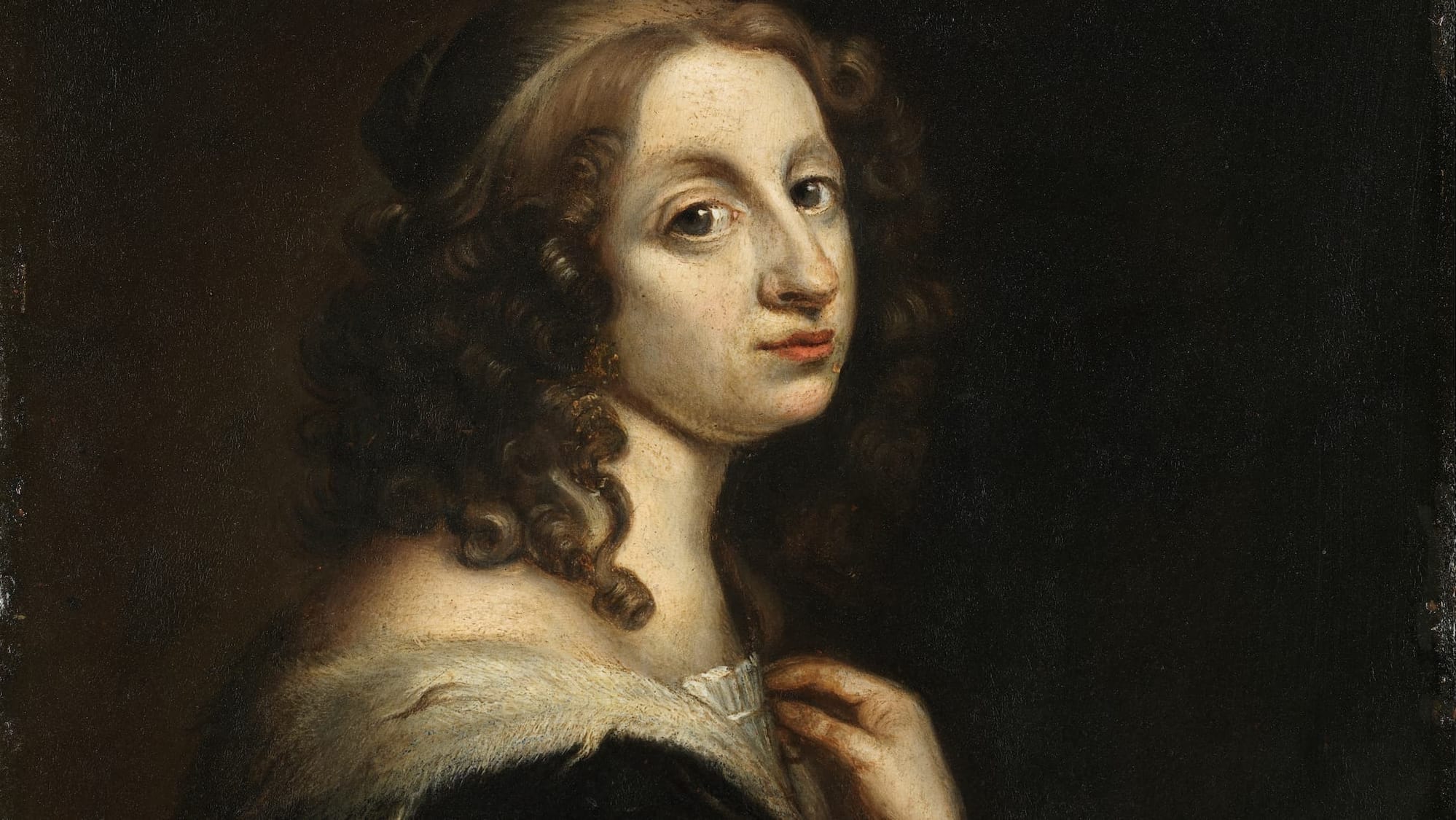
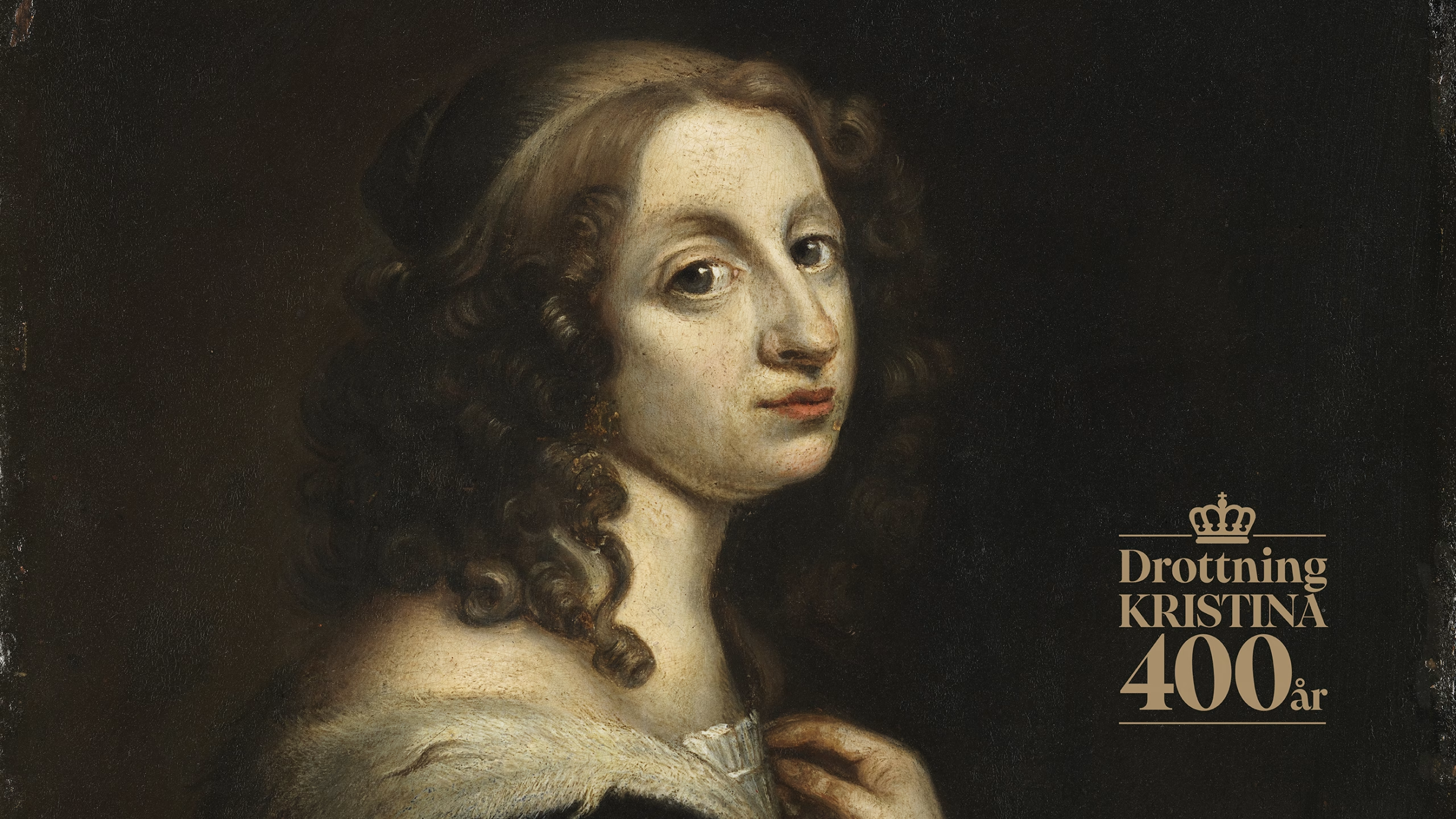
On 8 December 1626, a daughter was born to King Gustav II Adolf and Maria Eleonora of Brandenburg at Tre Kronor Castle in Stockholm. She would become one of the most celebrated and controversial figures in Swedish history – and one of the most consequential for the family at the centre of Polmanarkivet.
This December marks 400 years since that birth. Sweden and the broader European cultural world are marking the occasion with a full year of events.
The 2026 Programme
The Royal Armoury (Livrustkammaren) in Stockholm is coordinating the anniversary year alongside more than twenty Swedish and international partners – among them Riddarhuset, Nationalmuseum, the National Archives of Sweden, and the Royal Swedish Opera. Events run from April through to December. The programme is being updated throughout the year; further events are expected.

April
16 April – 17 May | Exhibition: Kung Kristina — Född fri (King Kristina — Born Free)
Students of Konstskolan Linnea present new paintings and sculptures interpreting Kristina's life story. Opens 16 April; Stockholm's Culture Night on 18 April falls within the exhibition run. Royal Armoury (Livrustkammaren), Slottsbacken 3, Stockholm.
June
20 June | Concert: Academy Concert No. 191
Part of the Bachfest Leipzig, this concert marks Kristina's 400th anniversary with vocal and instrumental Baroque music drawn from Stockholm, Innsbruck, and Rome during the second half of the 17th century – the world she inhabited and patronised. Performed by soloists and ensemble students from the Hochschule für Musik und Theater Leipzig. Tickets from €6 (students) to €15. Musikinstrumentenmuseum, Leipzig, Germany. Tickets and details.
August
21–23 August | Opera World Premiere: O morire, e libertà — Frihet, eller döden
The world premiere of a new opera about Queen Kristina, performed across three exclusive evenings. The score draws entirely from music Kristina knew during her lifetime – works she heard or personally commissioned from composers in her circle. A collaboration between Opera Warberg and Wermland Early Music. Doors open 18:40, performance begins 19:00. Tickets via tickster.com. Varbergs Teater, Varberg, Sweden.
September
3 September | City Walk: In the Footsteps of Queen Christina
A guided walk tracing Kristina's history through Uppsala, organised by the Uppsala Castle Historical Association. Uppsala, Sweden.
October
20 October | Concert: Queen Christina's Coronation
A concert at Stockholm Cathedral marking the anniversary, hosted by Storkyrkan. Storkyrkan, Stockholm.
28 October & 11 November | Guided Tours: Kristinehamn
Two guided visits exploring Kristina's connection to the only city in the world named after her, organised by Kristinehamns Historiska. Kristinehamn.
November
26 November | Lecture: Queen Christina's Life in Rome
A talk on Kristina's post-abdication life, presented by the Italian Cultural Institute in Stockholm. Italian Cultural Institute, Stockholm.
26 November | Guided Tour: Queen Christina as Letter-Writer
The Post Museum presents a special viewing exploring Kristina's prolific correspondence. Postmuseum, Stockholm.
December
2 December | Exhibition: Queen Christina
An exhibition on Kristina's life and reign opens at the National Archives of Sweden. Riksarkivet, Marieberg, Stockholm.
8 December | 400th Birthday Banquet
The flagship event of the anniversary year; a historically inspired 17th-century banquet on the exact date of Kristina's birth, 400 years on. Hosted by the Vasa Museum, the Royal Armoury, and the Christina Academy. Vasa Museum, Stockholm.
Further events to be announced
Additional programming is planned from the Royal Swedish Opera, Nationalmuseum, Skokloster Castle, the Royal Library, Drottningholm Palace Theatre, and the Swedish Institute in Rome, among others. The full and updated programme is maintained at livrustkammaren.se.
Why Kristina Matters Here
Kristina's reign sits at the heart of Polmanarkivet's history. In the middle of the seventeenth century, two brothers – Johan and Gustaf Polman, sons of Jöran Polman and grandsons of Jürgen Polman – presented themselves to the Swedish Crown with a claim. They held that they descended from an ancient noble line in Westphalia, that their ancestors had always been regarded as noblemen, and that the lineage was old. The documentation to prove it, they acknowledged, was largely gone. It was lost to the wars and upheavals that had scattered the family across the continent.
On 16 September 1650, Queen Kristina issued a patent of nobility at Stockholm Castle. In it, she addressed the claim directly, and in terms that have defined the family's history ever since:
"Whereas they themselves allege that they descend from a noble line out of Westphalia, and that their ancestors have always been esteemed and held as noblemen and called themselves Pohlmän — which We leave to its place, as such things, through the difficulties of the times and the great changes that have occurred in those places, are mostly lost and obscured."
— Queen Kristina, Patent of Nobility, 1650
She set the ancient claim aside. She then ennobled them anyway, citing the loyal and faithful service rendered to the Crown of Sweden not only by Johan and Gustaf themselves, but by their father and grandfather before them. The family henceforth bore the name Påhlman, registered under No. 501 in the House of Nobility.
Two years later, on 30 October 1652, Kristina directed that the brothers' sister, Anna Christina, and all her descendants "must be respected" and included in the same nobility — an act that extended the Påhlman line's standing across generations.
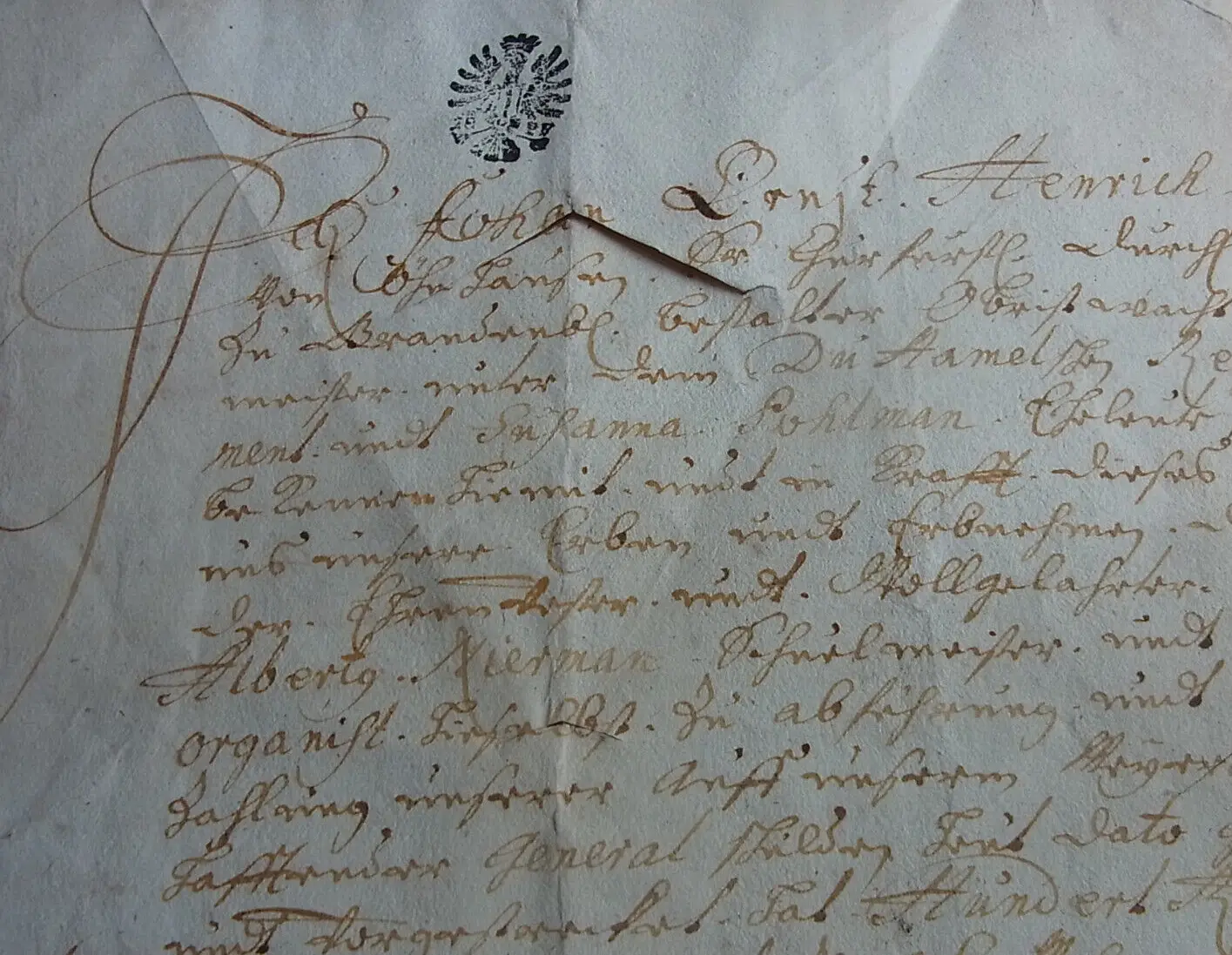
The original Sköldebrev, with its hand-painted Påhlman coat of arms and Kristina's wax seal, is held by Riddarhuset in Stockholm and can be viewed via their Minerva digital archive.
Our Contribution to the Anniversary Year
This year, Polmanarkivet is marking the 400th anniversary with a dedicated programme of original content, launching in November ahead of the December celebrations.
We are publishing a short biography of Queen Kristina — her reign, her contradictions, and her lasting place in Swedish history. Alongside it, we will be opening Queen of Peace and Prestige, a special digital exhibition exploring Kristina's world through the letters, portraits, and ephemera that surrounded her. And we will be publishing a dedicated piece on the Påhlman Sköldebrev of 1650, the patent of nobility bearing Kristina's seal that gave this family its name.
Throughout 2026, Polmanarkivet is marking 400 years of a reign that shaped Sweden — and shaped this family.